China’s Threat to U.S. AI Dominance
Weekly Investment Update | By Brian Schreiner
The major U.S. stock indexes fell around 1% to 2% as shifting narratives about AI prospects and technology stocks continued to drive the broader market. For the S&P 500, it was the fourth negative week out of the past five. Bonds and gold were up; commodities and bitcoin were down.
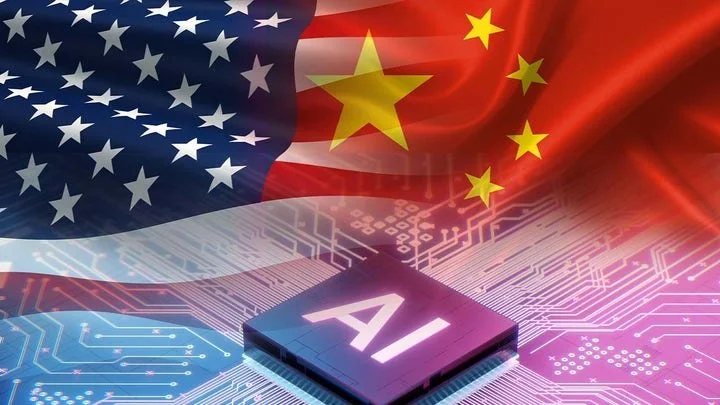
CHINA’S THREAT TO U.S. AI DOMINANCE - China is quickly catching up to the U.S. in the AI arms race, developing highly advanced models powered by homegrown chips and abundant low-cost energy. China’s rapid advancement is threatening U.S. AI dominance, with one analyst warning of a tech shock that is just getting started. “It’s not just AI, DeepSeek, and electric vehicles. China is moving up the value chain very rapidly,” said Rory Green, TS Lombard’s chief China economist and head of Asia research. China is pairing dominant-market level tech with emerging-market production costs, backed by its massive supply chain, Green said. (CNBC)
INFLATION MODERATED - The inflation is still running above the Fed’s 2% target but decelerated to 2.4% in January—down from 2.7% in December. Economist Adam Posen, President of the Peterson Institute, says another wave of inflation may push CPI to 4% by year-end. He says tariff impacts typically hit with about a one-year lag because businesses take time to process uncertainty before making major decisions such as changing suppliers or adjusting their pricing strategy. Posen expects the full weight of the trade policies will only begin to accelerate in the coming months. More upward pressure on prices could come from an influx of spending after stimulus checks are sent to consumers ahead of the midterms. Combined with market forces around the AI expansion a "perfect storm" of upward price pressures may be brewing, says Posen. (Bloomberg Podcasts)
NEAR ZERO JOB GROWTH IN 2025 - The BLS put out another strong-sounding jobs report on Wednesday. Non-farm payrolls (i.e. total number of U.S. workers excluding farm workers, private household and non-profit employees) rose by 130,000 in January and the unemployment rate fell to 4.3%. It’s important to remember that the report is an estimate—and they’ve significantly overstated in recent years. The BLS over-estimated job growth last year by nearly 1 million jobs. Now they say only 181,000 jobs were added last year. By contrast, the economy added 1.46 million jobs in 2024. The weakening labor market suggests the economy may be slowing, which could push the unemployment rate higher. (NBC News)
CONSUMERS ARE STRESSED - It feels like a recession for the bottom half of the demographic in the K-shaped economy. Consumer spending and savings are declining and many consumers are struggling with a massive spike in costs associated with car repairs (up nearly 50%), utility bills and insurance premiums, which have outpaced wage growth. These costs have effectively doubled the typical debt-to-income ratio for many from a manageable 30% to a precarious 60%. To bridge the gap, a growing number of people are relying on "Buy Now, Pay Later" (BNPL) services for essentials like food and rent, while lenders are modifying debt terms–also known as "extend and pretend"—to mask the growing affordability crisis that’s not yet fully showing in public credit data. (Lakshmi Ganapathi)
GOOGLE TO ISSUE 100-YEAR BONDS - One headline read, “In Google We Trust,” but some analysts say the ultra-long-term bonds raise red flags. Bill Blain, CEO of Wind Shift Capital, said the deal is reflective of the “off-the-historical scale” levels of debt now being raised in both public and private markets to finance AI expansion. While he gives Google “full credit” for taking advantage of the business opportunity, Blain believes it’s more proof the AI expansion is a bubble. “You can’t get much more frothy than that,” he said. Another analyst based in London said, “They are looking to tap into insurance and pension demand, and diversity funding sources to avoid over-saturating the U.S. dollar market.” The 100-year bonds will be denominated in British pounds. (CNBC)
WHEN YOUR PRIVATE CREDIT FUND TURNS $1 INTO 60 CENTS - Private credit has been in the news for all the wrong reasons. BlackRock just marked down a $1.8 billion fund by 19%. While many investors are looking to exit, Wall Street is quietly moving private credit into target date funds owned by millions of 401(k) savers. Private credit is illiquid and often high-risk. Firms like Apollo say they’re providing everyday investors access to elite, high-return opportunities, but it feels more like a risk transfer. Wall Street Journal columnist Jason Zweig explained what happened to several private funds that recently went public: In November, a FS Investments fund lost 25% on its first day on a public exchange. In December, a Bluerock fund lost nearly 40% on its first day on the NYSE. If you’re not sure what’s under the hood of your 401(k), contact me–I can help you find out. (The Wall Street Journal)
TOYOTA REMAINS MOST RELIABLE CAR BRAND, RIVIAN LAST - An infographic from Visual Capitalist ranks the most reliable car brands based on reliability scores by Consumer Reports, which collect detailed, self-reported information about problems owners have experienced with their vehicles. (Visual Capitalist)
EPSTEIN FILES JUST THE TIP OF AN ICEBERG - As new depths of the Epstein scandal are revealed, pulling on the string has started to unravel an ugly sweater where sex trafficking is just the tip of an iceberg. In her two-volume book, One Nation Under Blackmail, Whitney Webb explains how the strongest world governments “essentially operate as a meta-cartel.” Her books are an extensive analysis of historical and investigative work that frames the Jeffrey Epstein case as a continuation of intelligence-linked networks. While the mainstream is focusing on individual crimes around the sex scandal, Webb explores the broader intersection of intelligence, organized crime, and surveillance. She believes that the Epstein scandal will never be fully investigated because it’s not an isolated series of crimes, but rather a high-level intelligence operation deeply integrated into the bedrock of American and international power. In her view, Epstein functioned as a critical node in a state-sponsored blackmail network that traces its lineage back to a historic alliance between U.S. intelligence agencies and organized crime syndicates following World War II. The network exists to compromise and control world leaders, billionaires, and influential figures through "kompromat," a Russian spy term that refers to compromising material used to create negative publicity, exert leverage, or blackmail a public figure. Webb argues that the very institutions tasked with investigating the crimes—the FBI, the Department of Justice, and the intelligence community—are the very entities protecting it to maintain national security and geopolitical leverage. The legal proceedings following Epstein’s death, such as the trial of Ghislaine Maxwell, have been carefully managed to keep the focus strictly on sex trafficking while deliberately obscuring the "clients" and the broader financial and political infrastructure that enabled the operation for decades. A complete understanding of the scandal remains impossible because the truth would necessitate the total dismantling of the current global power structure, an outcome that will be prevented at all costs. (Whitney Webb)
THE ALPHA ROCK DIFFERENCE - Our investment strategies are a compelling alternative to traditional buy-and-hold investing. By focusing on liquid alternative investments and active risk-management, we target absolute returns, not benchmarks. To see how we’re invested and why, download our most recent Quarterly Investment Outlook, Bubble Watch & the Elusive Pin.
REVIEW YOUR INVESTMENTS - When market volatility increases, it’s a good time to review your investments, especially if you’re using a passive, buy-and-hold strategy. (Schedule a Call or Meeting)
We’d love to hear from you!
Your thoughts are important to us, so don’t hesitate to share them. They give us great motivation and encouragement.

IMPORTANT DISCLOSURE INFORMATION
This commentary reflects the personal opinions, viewpoints and analyses of the Alpha Rock Investments, LLC employees providing such comments, and should not be regarded as a description of advisory services provided by Alpha Rock Investments, LLC or performance returns of any Alpha Rock Investments, LLC client. The views reflected in the commentary are subject to change at any time without notice. Nothing in this commentary constitutes investment advice, performance data or any recommendation that any particular security, portfolio of securities, transaction or investment strategy is suitable for any specific person. Any mention of a particular security and related performance data is not a recommendation to buy or sell that security. Alpha Rock Investments, LLC manages its clients’ accounts using a variety of investment techniques and strategies, which are not necessarily discussed in the commentary. Investments in securities involve the risk of loss. Past performance is no guarantee of future results.
The S&P 500 Index or the Standard & Poor's 500 Index is a market-capitalization-weighted index of the 500 largest U.S. publicly traded companies. The S&P 500 is a float-weighted index, meaning company market capitalizations are adjusted by the number of shares available for public trading. Note: Investors cannot invest directly in an index. These unmanaged indices do not reflect management fees and transaction costs that are associated with most investments.
Alpha Rock Investments, LLC provides links for your convenience to websites produced by other providers of industry related material. Accessing websites through links directs you away from our website. Alpha Rock Investments, LLC is not responsible for errors or omissions in the material on third party websites, and does not necessarily approve of or endorse the information provided. Users who gain access to third party websites may be subject to the copyright and other restrictions on use imposed by those providers and assume responsibility and risk from use of those websites.