A Commodity More Critical Than Oil
Weekly Investment Update | By Brian Schreiner
WAR INTENSIFIES, OIL PRICES AND MARKET VOLATILITY SPIKE - Over the weekend, Israel bombed Iranian oil depots, Iran responded with new attacks and Saudi Aramco reduced oil output as storage facilities reach capacity. Oil prices reached almost $120 overnight as markets in Europe and Asia were down sharply overnight. U.S. stocks are set to open lower this morning after the S&P 500 finished last week down –2%, its largest weekly loss in nearly five months and its lowest close since mid-December. As of Friday, the Index is down –3.4% from its January 27 all-time high. Bonds and gold were also down last week while commodities and bitcoin moved higher.
PERSIAN GULF NEARLY IMPASSABLE - The Strait of Hormuz is the world’s second largest chokepoint for global oil trade. Kuwait has joined a growing list of Middle Eastern nations scaling back oil production and refining as the conflict with Iran renders the Persian Gulf nearly impassable for tankers. The Strait of Hormuz is currently too dangerous for transit and oil is piling up in a bottleneck signaling a shift from hypothetical market fears to a tangible, physical disruption of the global energy supply. The economic impact has been historic, with oil prices recording their largest weekly gains on record. Analysts at JPMorgan warn that if the Strait remains closed for more than three weeks, global production cuts could exceed 4 million barrels per day, potentially destabilizing energy markets further. (CNBC)
A COMMODITY MORE CRITICAL THAN OIL - In a region defined by vast deserts and even vaster oil wealth, the real economic backbone of the Middle East isn't oil—it’s drinking water. The region’s roughly 450 desalination plants keep 100 million people hydrated. For countries like Kuwait, Qatar, and the UAE, these facilities are the literal lifeblood of modern metropolises like Dubai and Riyadh. In fact, declassified documents and diplomatic cables suggest that if a major plant like Saudi Arabia’s Jubail were destroyed, a city like Riyadh might have to be evacuated within a single week. This extreme dependence has created a massive geopolitical vulnerability. Because Iran cannot match the sheer military power of the U.S. and its allies in a traditional "war machine" sense, it may be forced to target these "soft targets" to gain leverage. Yesterday, officials in Bahrain said a desalination plant was damaged by an Iranian drone attack. (Bloomberg)
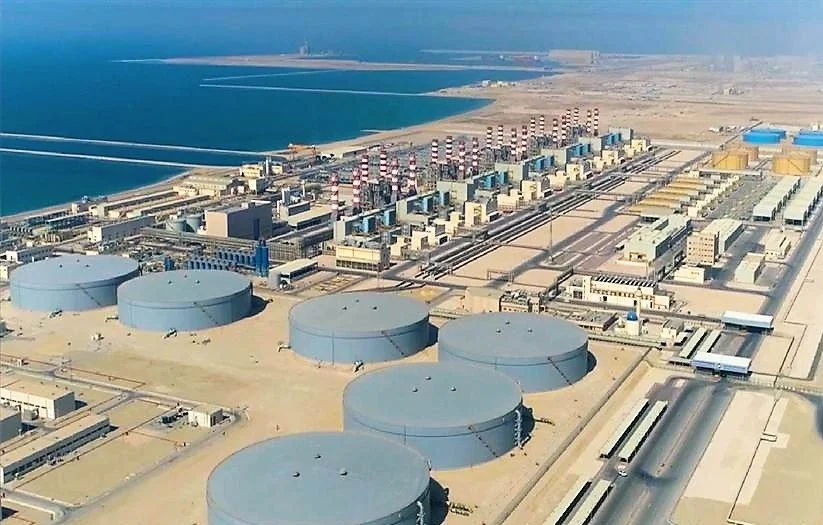
Water Desalination Plant in Saudi Arabia
U.S. LABOR MARKET IN TROUBLE - The U.S. economy lost 92,000 jobs last month—more than expected and the third decline in five months. The national unemployment rate ticked up to 4.4%, while the average duration of unemployment stretched to 25.7 weeks, the highest level in over four years. Job losses were felt across nearly every major sector (CNBC)
RETAIL INVESTORS REMAIN BULLISH - While many institutional investors have been reducing risk in recent months, retail investors are all-in. Blind asset allocation and passive market participation is the default strategy for millions of Americans. Driven by retirement plan contributions, index investing accounts for 60% of all market flows. In a new report from Citadel Securities, Scott Rubner says, “Retail remains the strongest hand in the entire market. The magnitude and persistence of the buying activity has been extremely notable. January 2026 marked the largest net buying month on record on our platform. February flows, while below that January surge, still ranked as the fifth-largest net buying month in our platform’s history and the strongest in about five years. Retail’s appetite to buy the dip has remained a dominant force in early-2026 flows. Year-to-date, average net notional traded on our platform has been 2.5x larger on S&P down days than on up days.”
PRIVATE CREDIT NEWS GETS WORSE - I first warned about the risks of private credit last spring. Since then, investors’ concerns over “cockroaches” in the $1.8 trillion market have materialized. Last week brought another string of concerning headlines: Blackstone received some $3.8 billion in redemption requests and announced it would fill the gap using company and employee assets to meet investor requests. Market Financial Solutions (MFS), a non-bank lender in the UK that sits on the balance sheet of some of the world’s largest financial institutions has collapsed and is facing fraud allegations. Barclays and Apollo Global Management have exposure to MFS that amounts to £600 and £400 million respectively. The MFS private lending fraud is the third that has been exposed in the last six months—the other two being Tricolor Holdings and First Brands Group. Another private credit manager, Invico Capital Corporation, is dealing with a flood of redemption requests from large investors and has adopted what it calls a “structured liquidity management plan,” a move that suggests that it's not only retail investors who are getting fearful of private credit—it’s institutional investors as well. Over the weekend, BlackRock restricted investor withdrawals from one of its flagship private credit funds after a surge in redemption requests, adding to growing signs of stress in the rapidly expanding $2 trillion private credit market.
UNDERSTANDING THE RISKS IN PRIVATE CREDIT - If you’re interested in understanding the risks facing the private credit market in more detail, I recommend following Chris Whalen of the Institutional Risk Analyst. He does a “Weekly Wrap” on The Julia La Roche Show, where he shares his independent, institutional-grade insights into U.S. banking, credit markets, and financial regulation. In my view, he’s one of the best at helping investors understand financial market risks and spot macroeconomic shifts.
THE LIFE INSURANCE & ANNUITY CRISIS WAITING TO HAPPEN - Steve Eisman interviewed forensic accountant Tom Gober last week to discuss a potentially catastrophic scandal brewing within the life insurance and annuity industry. The core issue is the aggressive takeover of insurance carriers by private equity firms, which have begun using policyholders' premiums to fund their own risky, illiquid private credit deals. By shifting away from traditional, safe bonds toward exotic investments with questionable ratings, these firms are essentially treating insurance companies as "captives" to buy their own paper, creating a massive conflict of interest where the sophisticated owners of the capital are taking significantly more risk with people's life savings than the public realizes. The long-term bull market in credit has hidden these vulnerabilities so far. The danger is compounded by a lack of transparency and a fractured regulatory system that operates at the state level rather than through the federal government. Secret offshore captive reinsurers holding billions in liabilities have allowed the industry to become dangerously overleveraged. Both Eisman and Gober are concerned that people won't realize their life insurance policies and annuities are at risk until a credit downturn causes the system to buckle. Much like the 2008 financial crisis, the complexity of the accounting and the leniency of underfunded regulators are masking a hole that is far larger than it appears. (The Real Eisman Playbook)
THE ALPHA ROCK DIFFERENCE - Our investment strategies are a compelling alternative to traditional buy-and-hold investing. By focusing on liquid alternative investments and active risk-management, we target absolute returns, not benchmarks. To see how we’re invested and why, download our most recent Quarterly Investment Outlook, Bubble Watch & the Elusive Pin.
REVIEW YOUR INVESTMENTS - When market volatility increases, it’s a good time to review your investments, especially if you’re using a passive, buy-and-hold strategy. Please schedule a call or meeting)
We’d love to hear from you!
Your thoughts are important to me, so don’t hesitate to share them. They give me great motivation and encouragement.

IMPORTANT DISCLOSURE INFORMATION
This commentary reflects the personal opinions, viewpoints and analyses of the Alpha Rock Investments, LLC employees providing such comments, and should not be regarded as a description of advisory services provided by Alpha Rock Investments, LLC or performance returns of any Alpha Rock Investments, LLC client. The views reflected in the commentary are subject to change at any time without notice. Nothing in this commentary constitutes investment advice, performance data or any recommendation that any particular security, portfolio of securities, transaction or investment strategy is suitable for any specific person. Any mention of a particular security and related performance data is not a recommendation to buy or sell that security. Alpha Rock Investments, LLC manages its clients’ accounts using a variety of investment techniques and strategies, which are not necessarily discussed in the commentary. Investments in securities involve the risk of loss. Past performance is no guarantee of future results.
The S&P 500 Index or the Standard & Poor's 500 Index is a market-capitalization-weighted index of the 500 largest U.S. publicly traded companies. The S&P 500 is a float-weighted index, meaning company market capitalizations are adjusted by the number of shares available for public trading. Note: Investors cannot invest directly in an index. These unmanaged indices do not reflect management fees and transaction costs that are associated with most investments.
Alpha Rock Investments, LLC provides links for your convenience to websites produced by other providers of industry related material. Accessing websites through links directs you away from our website. Alpha Rock Investments, LLC is not responsible for errors or omissions in the material on third party websites, and does not necessarily approve of or endorse the information provided. Users who gain access to third party websites may be subject to the copyright and other restrictions on use imposed by those providers and assume responsibility and risk from use of those websites.